Is There a Jet Fuel Shortage? A Private Jet CEO Responds.
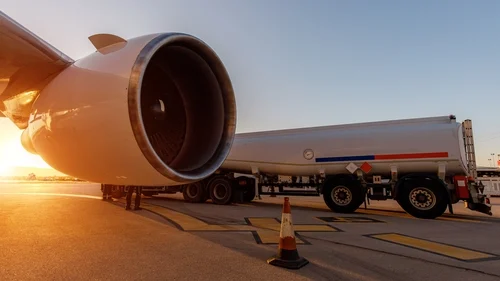
Is There a Jet Fuel Shortage? A Private Jet CEO with 35 Years of Experience Weighs In.
The Strait of Hormuz is closed. Major airlines have canceled hundreds of flights globally. Europe may hit a 23-day shortage threshold by June 2026. Based on those headlines, a serious jet fuel shortage seems like a certainty.
It is not.

Greg Raiff, Founder and CEO of Elevate Jet and a 35-year veteran of the private aviation industry, says the shortage narrative is being driven by politics and airline economics, not actual supply. "I'm saying we are not going to run out of jet fuel," Raiff told Fortune in May 2026. "In my professional opinion, 35 years doing this, we are in no risk of running out of jet fuel anytime soon."
Here is a detailed breakdown of what is actually happening, why commercial airlines are canceling flights, and what it means for private aviation demand in 2026.
Is There Actually a Jet Fuel Shortage in 2026?
No. According to Greg Raiff, CEO of Elevate Jet, there is no meaningful jet fuel shortage. The global supply of jet fuel remains available. What has changed is the price, not the volume.
Jet fuel on the open market is now priced above $4 per gallon. At some private terminals, operators are being charged over $10 per gallon, driven by FBO-level markups on top of taxes and service fees, not by supply scarcity. The commodity exists. The cost to access it has risen significantly. For a detailed breakdown of what is driving those FBO prices and who controls the pump, see what happened when jet fuel crossed $10 a gallon.
Private aviation demand has reflected this reality: rather than contracting, total hours flown, total volume of arrivals and departures, and total demand are all up year over year on a global basis as of 2026.

Why Are Commercial Airlines Canceling Flights If There Is No Shortage?
Commercial airlines are canceling flights not because they cannot source fuel, but because rising fuel costs have made certain routes unprofitable.
Airlines are contractually required to operate a minimum number of flights on specific routes in order to retain their airport slots. Before the current conflict, that was manageable. With open-market jet fuel prices more than double pre-war levels, routes to markets like Dubai and Riyadh that were marginally profitable are now loss-generating.
By declaring "force majeure," airlines have found a legal mechanism to exit those routes while keeping their slots intact. The fuel shortage narrative provides convenient political cover for what is, at its core, a commercial decision.
"Those stories are largely politically driven by governmental authorities who are trying to pressure an end to the war," Raiff said. "No better way to get people out than tell them that they can't get to their summer holiday."
For travelers with European or international summer plans already booked, the implications vary significantly by destination. Here is a destination-by-destination breakdown of what the Middle East crisis means for summer travel.
What Is Driving Jet Fuel Price Increases in 2026?
Three factors are compounding at once.
Open market price increases. Jet fuel on the open market now exceeds $4 per gallon, up significantly from pre-conflict pricing.
FBO markup and fee stacking. At private terminals, operators are absorbing base fuel costs plus taxes, government fees, and service charges that can push the per-gallon total above $10. Raiff documented one Washington, D.C. facility charging $10.42 per gallon. These markups are not tied to supply conditions and, historically, do not reverse once established.
Geopolitical supply concentration. The Strait of Hormuz handles more than 20% of the world's jet fuel supply. Its closure has created a pricing shock without yet creating an availability crisis.
What makes this moment particularly complex is not just the cost increase but the volatility that has come with it. Fuel did not just get more expensive in 2026. It became unpredictable, and those are two different problems that require two different solutions.

What Happens to Jet Fuel Supply This Fall?
The scenario most worth watching is not the current moment but October 2026.
Jet fuel and home heating oil are chemically similar refined products. Refineries can shift production capacity between them. If the current conflict remains unresolved into fall, heating oil demand will compete directly with aviation for the same refinery output.
"If we still have this issue going in the fall, call it October, I think we'll begin to have a competition between heating our homes or flying our planes," Raiff said.
That structural constraint is the material risk to monitor, not present-day supply.
How Is Private Aviation Demand Performing Amid Fuel Price Volatility?
Private aviation demand has grown, not contracted, since fuel prices began rising in 2026.
Elevate Jet has not seen a slowdown in client demand. Total private aviation hours flown and departure volumes are up year over year on a global basis. A 2026 analysis from ESGauge found that 48.8% of S&P 500 companies now allow their CEOs private use of a corporate jet, up from just 6% in 2021, reflecting a structural shift in how business travel decisions are being made at the executive level.
Private aviation clients are, by nature, less price-sensitive than commercial travelers. What they prioritize is reliability, flexibility, and access. In an environment where commercial schedules are being cut and route uncertainty is high, those priorities become even more pronounced. Book a flight on the Elevate Jet app to see real-time pricing and availability across all aircraft categories.

How Does Elevate Jet Handle Fuel Price Volatility for Clients?
Elevate Jet operates with a transparent fuel surcharge model. When market conditions shift, clients are informed proactively, not surprised at the point of booking. Ruby, the proprietary pricing engine that powers the Elevate Jet platform, reflects real market conditions with pricing logic built to move accurately with supply and demand rather than approximate it. Ruby was built on three decades of private aviation operational data and is designed to deliver pricing accuracy at the moment of booking, not hours later after a callback. For a deeper look at how fuel became a transparency issue across the industry and what Elevate built in response, read how the unpredictability problem drove a different pricing architecture.
For clients seeking fixed-rate protection against fuel volatility, the Azurite Jet Card offers locked hourly rates with no blackout dates and no fuel surcharge surprises, built specifically for fliers who want cost certainty in uncertain markets.
Frequently Asked Questions About the 2026 Jet Fuel Shortage
Is there a jet fuel shortage in 2026?
No. According to Greg Raiff, CEO of Elevate Jet, global jet fuel supply remains available. The issue is price, not scarcity. Open-market jet fuel now exceeds $4 per gallon, and private terminal markups can push costs above $10 per gallon, but these reflect pricing dynamics, not a supply crisis.
Why are airlines canceling flights if there is no fuel shortage?
Airlines are using force majeure declarations to exit routes that have become unprofitable due to higher fuel costs, particularly to Middle Eastern destinations. Cancellations are a commercial strategy, not evidence of unavailable fuel.
Will jet fuel prices go down in 2026?
FBO and terminal-level fuel prices historically do not decline once elevated. Open-market prices may adjust if the geopolitical situation resolves, but service fees and markups tend to become the new floor. Fall 2026 is the key risk window if heating oil demand begins competing with aviation for refinery output.
Is private jet travel affected by the fuel shortage?
Private aviation demand has increased since fuel prices rose in 2026. Private fliers are relatively price-insensitive and are prioritizing reliability over cost, particularly as commercial route availability becomes less predictable. Search live pricing and book instantly on the Elevate Jet app.
How does Elevate Jet protect clients from fuel surcharge surprises?
Elevate Jet separates fuel into a visible line item at checkout so clients see exactly what market conditions are driving the final price. For clients who want full price certainty regardless of market conditions, the Azurite Jet Card locks in a fixed hourly rate with no post-contract fuel escalators.
Who is Greg Raiff?
Greg Raiff is the Founder and CEO of Elevate Jet and Private Jet Services, with 35 years of experience in private aviation. He was quoted by Fortune in May 2026 on the fuel shortage narrative driving commercial flight cancellations globally.
Greg Raiff is the Founder and CEO of Elevate Jet and Private Jet Services, with 35 years of experience in private aviation. This post expands on his comments to Fortune published May 14, 2026.
Read the original Fortune coverage here.
Download Our
Instant Booking App