Your Summer Travel Plans and the Middle East Crisis: A Destination-by-Destination Breakdown
UNDER THE HOOD
Your Summer Plans Are Not Ruined. But You Need to Read This.
An inside view of how the Middle East fuel crisis is reshaping summer travel — destination by destination.
By Greg Raiff, Founder and CEO, Elevate Aviation Group | April 2026
Greg Raiff has spent 30 years in private aviation moving the people who cannot afford to be stuck — presidential campaigns, stadium tours, professional sports teams. He has seen fuel shocks before. He has rerouted aircraft in the middle of the night. When clients call him in a panic about their summer travel plans, he tends to know the answer before they finish the question.
If you have a European summer trip on the calendar, you are probably already seeing the headlines. Lufthansa just cut 20,000 short-haul flights through October. KLM and Scandinavian Airlines have announced their own reductions. Airfares are rising. Routes are disappearing. And the IEA has warned that Europe may have as few as six weeks of jet fuel reserves left if the Strait of Hormuz standoff does not resolve.
The backstory: US and Israeli strikes on Iranian oil infrastructure triggered an energy shock that has sent jet fuel prices from roughly $90 per barrel to over $205 in less than six weeks. Europe imports about a third of its jet fuel from the Middle East, which is why European carriers are bearing the sharpest impact. The US market is structurally more insulated — but that does not mean American travelers are unaffected.
What it means in practice depends entirely on where you are going. Here is how the summer looks, destination by destination, from the vantage point of a team that books thousands of trips a year.
Croatia and Greece: Proceed With a Backup Plan
%20-%20Dubrovnik%20-%20Croatia%20-%20David%20Hein-feature.jpg)
What is pulling back
Destinations within Iran’s missile range — Croatia and Greece specifically — are seeing year-over-year dips in request volume. Travelers are uneasy, even if the risk is low.
What is holding up
The far western edge of Europe is performing well. Spain, the U.K., and France are seeing solid demand. Last summer saw record numbers of Americans traveling to Europe — this summer, that volume will likely be lower overall.
The concern is not primarily about safety — the affected Lufthansa routes include France, Germany, Spain, Poland, Norway, Estonia, and Croatia, and schedule reliability is the real issue.
The short-haul segment is where the risk is concentrated. Both Croatia and Greece sit at the eastern edge of Europe, which means feeder connections from major hub airports are among the first to be cut when carriers start rationalizing short-haul networks. If your itinerary depends on a regional connector — Zagreb to Dubrovnik, Athens to Mykonos — that is exactly the type of leg that has become unreliable this summer.
"Airlines are publicly traded companies, and stock price moves on expectations. There is nothing like using a crisis to create covering fire for routes you were already planning to eliminate. I guarantee you will not see Air France cancel its New York flights. Those are profitable. It is the feeder legs that disappear — and the airlines are not unhappy about it."— Greg Raiff, CEO, Elevate Aviation Group
The practical implication: these destinations are reachable, but travelers should either book with maximum flexibility or consider flying into a major western hub — London, Paris, Madrid — and continuing privately.
Spain, France, and the UK: The Stronger Options This Summer
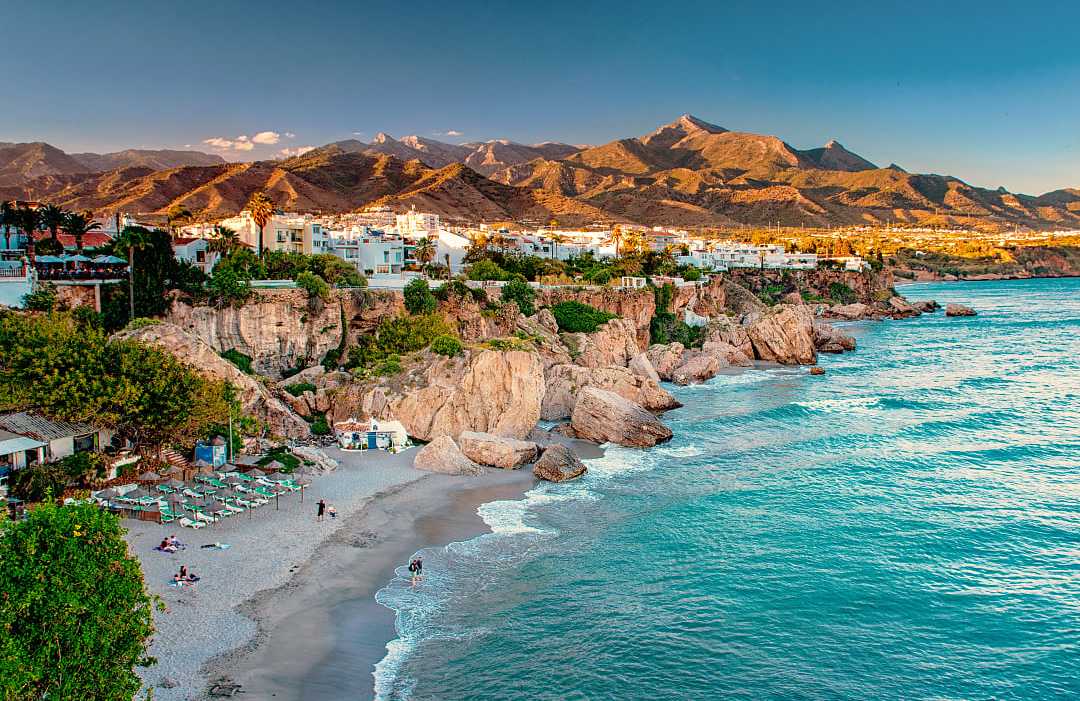
Western Europe is a different story. Spain, France, and the UK sit outside the airspace complexity affecting eastern Mediterranean routes, and the transatlantic infrastructure into London, Paris, and Madrid is not where carriers are making cuts.
Raiff is direct about this one: travelers who have been waiting to commit to a western European summer should stop waiting. The disruption here is in price, not availability — and fares on some routes have already climbed by $100 or more per person before peak season pricing compounds the issue. A canceled route cannot be solved by paying more. A price increase can.
"Spain is doing well. The UK is doing well. France is doing well. If you want to go to Europe this summer and you haven't booked, those are the places to go. The question is not whether to go — it's whether you're going to pay more the longer you wait."— Greg Raiff
Travel to Africa: The Dubai Layover Is a Long Shot

Of all the conversations Raiff is having this spring, the Africa safari call is the most consequential — and the one where the answer requires the most explanation.
Emirates and Qatar built a category-defining travel product around the North America-to-Africa connection via Dubai and Doha. The model worked for years: fly east, spend a night or two in a world-class hub city, continue south into Kenya, Tanzania, or South Africa. That routing is now functionally broken for the summer of 2026, with Middle Eastern airspace carrying too much uncertainty to anchor an itinerary around.
"There are almost no aircraft that can fly nonstop from the US to Kenya or South Africa — the range isn't there. And even for those that can make it, the economics are extraordinary. What clients are doing now is routing through Lisbon or Madrid instead. You spend two nights there, then fly south into Nairobi or Johannesburg on a European carrier. The total travel time is about the same. In most cases, the trip is actually better."— Greg Raiff
The new template: transatlantic to Lisbon, Madrid, or another western hub, followed by one or two nights, then onward to the African continent via Air France, KLM, British Airways, or Iberia. What was once a logistical compromise — a western detour instead of a Gulf layover — has become, in Raiff's view, a genuine upgrade.
"What used to be a 14-hour Dubai layover is becoming two nights in Lisbon. That is not a consolation prize."— Greg Raiff
The Caribbean and US Domestic: Where the Story Inverts

World Cup as a stabilizer
The 2026 World Cup being held in the United States is significant. Had it been overseas, we would experience cancellations or postponements. Beyond sports, it is a major economic driver and will keep a portion of travel demand domestic. An increasing portion of this travel is happening in the private travel sector.
In North America, US private jet departures were up 6.6% year-over-year in March, and ARGUS projects a 3.9% year-over-year increase for April. Jet fuel pricing in North America has risen, but the structural disruption to route networks simply does not exist here the way it does in Europe.
What is happening instead is a substitution effect: travelers who would have gone to Europe this summer are redirecting toward premium domestic alternatives and the Caribbean. The Turks and Caicos, the US Virgin Islands, Montana, Colorado, and the Hamptons are all seeing elevated interest from clients who are effectively repricing their summer against European uncertainty.
“For every person flying privately, there are nine people who can afford to fly privately and choose not to — because the cost premium over commercial is significant. What changes that calculation is a moment where commercial simply fails them. A canceled connection. A route that no longer exists. A summer where the math of booking commercial starts to look less reliable than they assumed.”
— Greg Raiff
Frequently Asked Questions
My European trip includes a regional connection. Should I be concerned?
Yes, if that connection touches a secondary or eastern European hub. Short-haul feeder legs — regional airports, secondary hub connections — are where cancellations are concentrated this summer. If your itinerary depends on a leg like Zagreb to Dubrovnik or Athens to Mykonos, build in redundancy now. Book with maximum flexibility, or price a private alternative for that specific segment. A private leg from a major hub to your final destination is often more affordable than you expect and eliminates the most likely failure point in your itinerary.
I have a safari booked through Dubai or Doha. What should I do?
Call your travel advisor this week. The routing needs to change. Western European connections through Lisbon, Madrid, London, or Paris are the reliable alternative this summer, and rebooking now is considerably easier than rebooking in July. The new template — transatlantic to a Western European hub, one or two nights, then onward via Air France, KLM, British Airways, or Iberia — is not a downgrade. In many cases it is a better trip.
Which European destinations are the safest bets this summer?
Spain, Portugal, France, and the UK are the most insulated options. Their major airports sit at the western edge of Europe, away from airspace complexity around the eastern Mediterranean, and they do not rely on Middle Eastern transit routes. Croatia and Greece are viable but require more contingency planning than in previous years — their position at the eastern edge of Europe makes them more vulnerable to short-haul network cuts.
Are airfares going to keep rising?
Fuel surcharges have already pushed some transatlantic fares up by $100 or more per person, and that is before peak season pricing. Whether prices stabilize depends largely on how quickly the Strait of Hormuz situation resolves. The IEA has warned that Europe has as few as six weeks of jet fuel reserves at current consumption. If the standoff extends, upward pressure on fares will continue. For a deeper look at how fuel pricing flows through to private aviation specifically, see What the Airlines Know About Fuel That Most Private Flyers Do Not.
Is the US domestic market affected?
Less structurally, but not immune. Jet fuel prices in North America have risen, but the route network disruption affecting Europe does not exist here. Private jet departures in the US were up 6.6% year-over-year in March, and ARGUS projects continued growth through April. The bigger US story this summer is a substitution effect — travelers who would have gone to Europe are redirecting to domestic alternatives: the Caribbean, Montana, Colorado, the Hamptons.
Should I consider flying privately for part of my trip?
If your trip includes a regional European connection that has become unreliable, pricing a private alternative for that segment specifically is worth doing. The booking window is shorter than it looks. Commercial schedule cuts are compressing availability in peak summer markets, and options narrow meaningfully as July and August approach. A partial private itinerary — commercial transatlantic, private for the final leg — can preserve your destination while eliminating the highest-risk part of the journey. Search available aircraft and get an instant price in the Elevate Jet app.
Greg Raiff is the Founder and CEO of Elevate Aviation Group, the parent company of Private Jet Services (PJS), Keystone Aviation, and Elevate Jet. Elevate Aviation Group has operated in private aviation for 30 years. For media inquiries, contact press@eag.aero.
Download Our
Instant Booking App